Startup inefficiencies on packaging lines are often accepted as part of normal operation. Operators often have no choice but to adapt and find ways to manage these issues. But something as simple as inconsistent belt performance at startup can lead to material waste, lost production time, and unnecessary operating costs.
When a major food manufacturer running GEA vertical form-fill-and-seal equipment encountered these issues, they turned to Belt Power to investigate. Rather than starting with a routine belt replacement, a Belt Power expert surveyed the whole system and uncovered a broader performance gap tied to the OEM solution.
The result was an application-specific belt that eliminated warm-up time, reduced waste, and improved startup performance across multiple facilities.
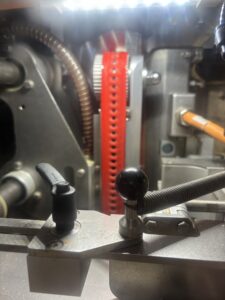
The facility relied on OEM urethane belts in its GEA bagger machines. At startup, those belts required a warm-up period before they could generate the traction needed to pull packaging film consistently.
This created several ongoing challenges:
What appeared to be a normal startup characteristic was, in reality, a repeatable source of inefficiency – affecting throughput, material usage, and overall line performance.
Rather than continuing with a like-for-like OEM replacement, Belt Power evaluated how the belt performed in the actual operating environment.
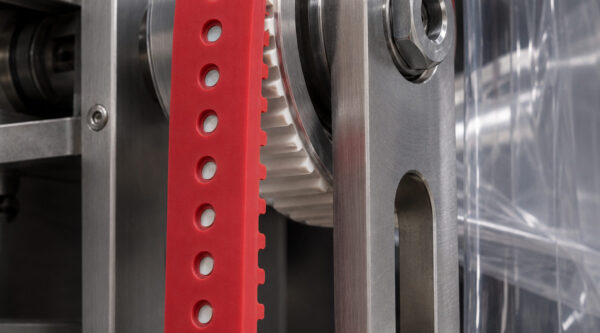
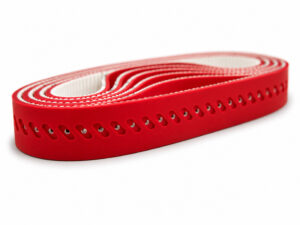
The team recommended a silicone-based belt better suited to the application’s grip requirements. The new belt delivered immediate traction at startup, eliminated the warm-up period, and improved consistency in film handling and bag formation.
Instead of defaulting to the OEM specification, Belt Power introduced a solution designed for real-world operating conditions.
“By moving us away from high-cost OEM parts and transitioning to their recommended solutions, Belt Power helped us save thousands of dollars without sacrificing quality or performance.”
The new belt solution delivered both direct and indirect cost benefits.
Under typical operating conditions, the previous 30-minute startup delay resulted in 130 hours of lost production time per plant annually.
The success of the initial implementation has led to expansion across additional facilities using the same equipment, amplifying its benefits.